CUSTOMER STORY

A 3.6 m World Cup trophy, 3D printed

Maker of the month

Giant World Cup, CascavelInstagram @3dxavInstagram @tecnogocho3dInstagram @hectoradophoto

In Cascavel, Brazil, a small team of Venezuelan makers printed and assembled a 3.6 m, 130 kg replica of the World Cup, which they present as the largest 3D-printed trophy in the world.

  • 3.6 m tallSize
  • Over 130 kgTotal weight
  • 7 mm thickPrinted parts
  • Nearly 2,500 staples, fibreglassAssembly
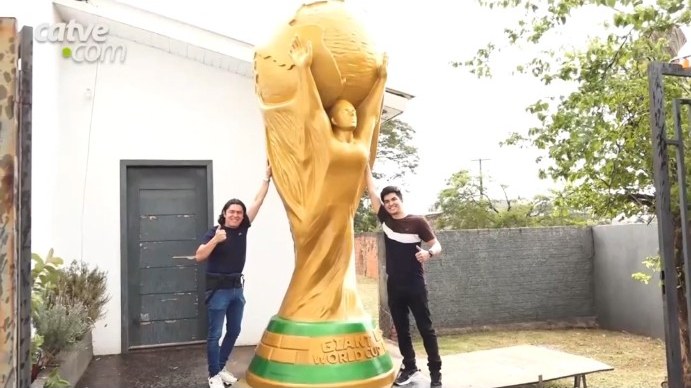
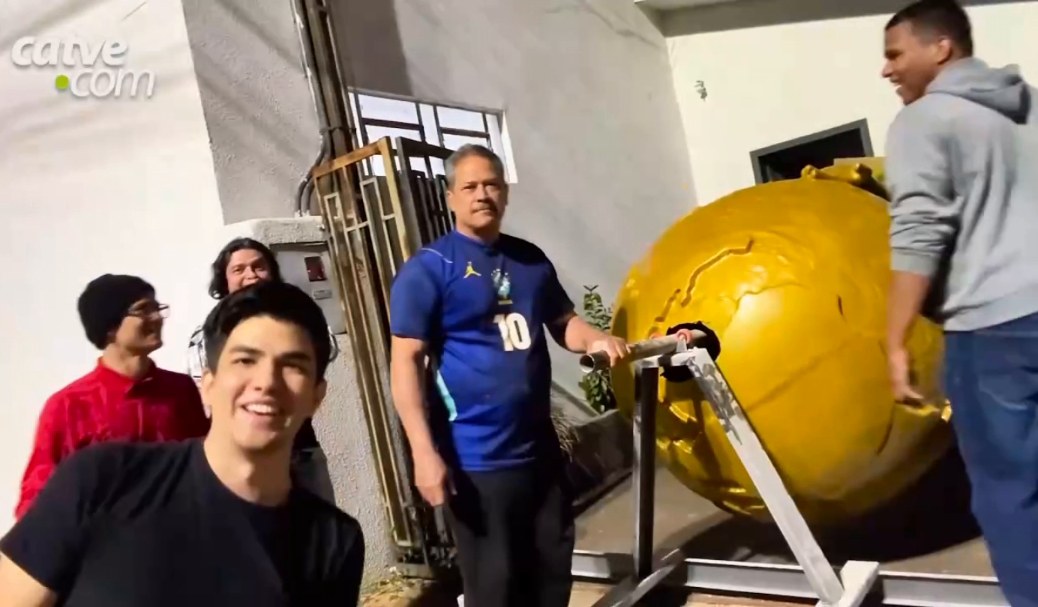
Giant golden World Cup replica in front of a house, two men posing next to it
The finished 3.6 m trophy with two of its makers.

Brazil did not bring the World Cup home, but Cascavel has its own: a 3.6 m tall replica, built on the spot by Venezuelan makers who live in the city. Before starting, they searched the Internet for a 3D-printed reference taller than 3 metres: they found none.
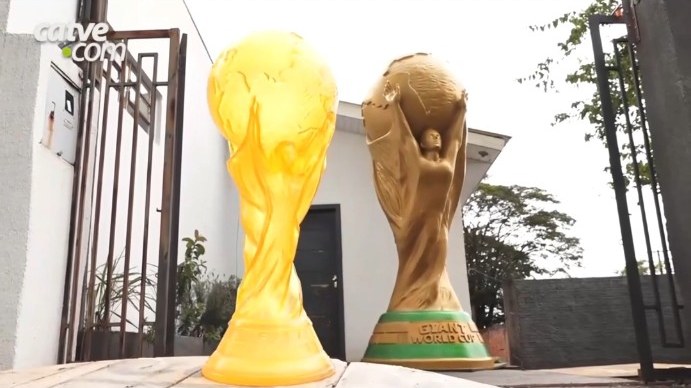
Two World Cup replicas, a small yellow one in the foreground and the giant golden one behind
The small printed cup and the giant version.

It all starts with a small workshop and a 3D model. The sculpture was reworked on the computer, with details that even the original image does not show, such as the fingers of the hands. For a piece this size, they also built a mobile base with a rotating axis.
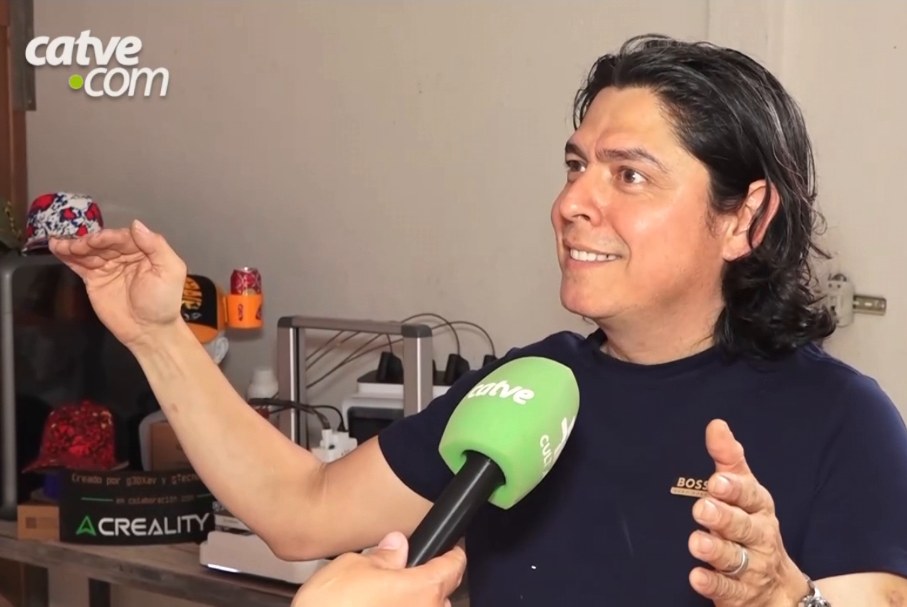
Long-haired man interviewed in a 3D printing workshop
In the workshop, one of the makers tells the story of the project.
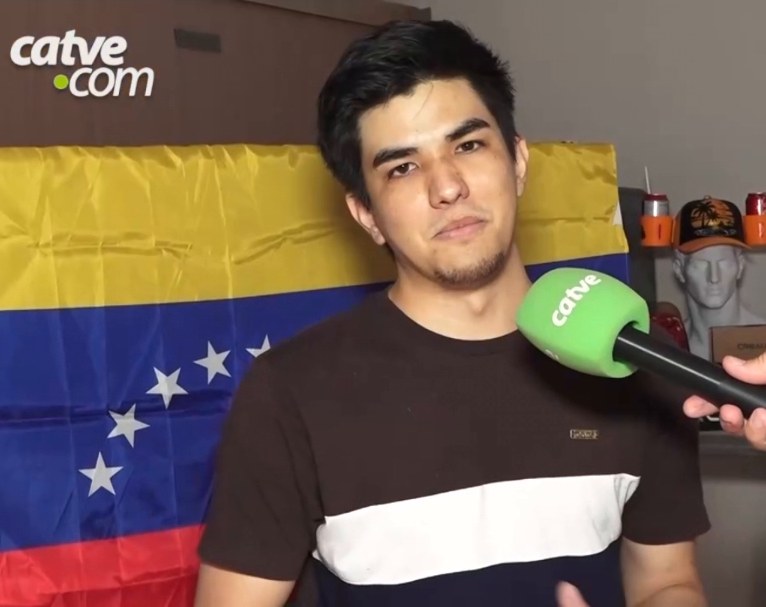
Young man interviewed in front of a Venezuelan flag
Another member of the team, in front of the Venezuelan flag.

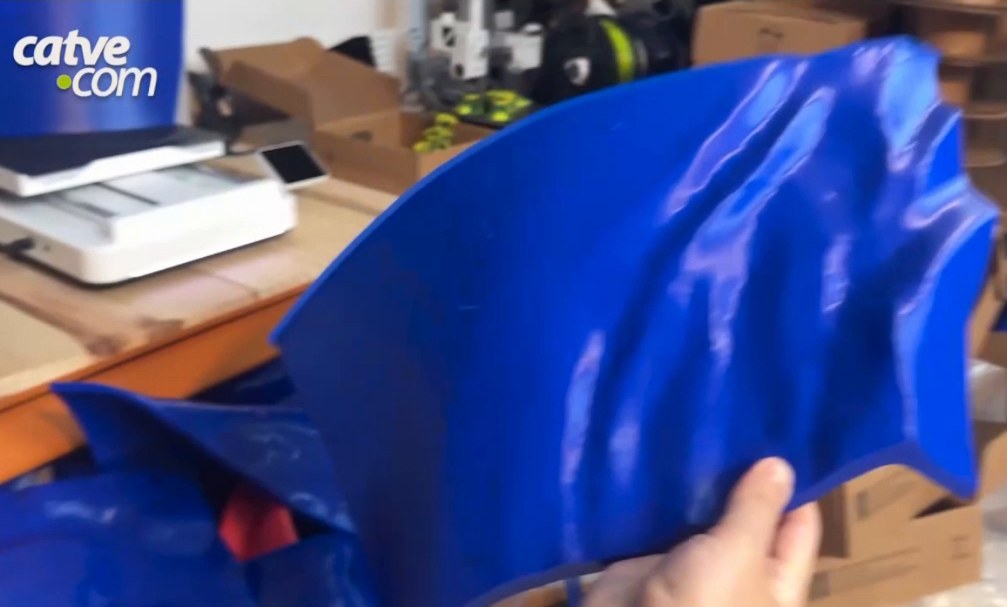
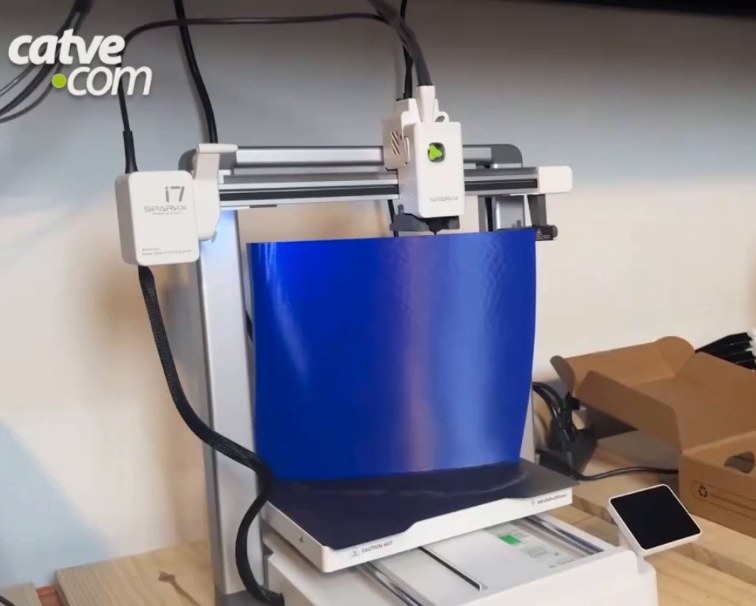
The model was split with Split3r into parts sized for the print beds, each with its own assembly guides. Then they had to be printed: a great many parts, each 7 mm thick.
Hand holding a large blue 3D-printed part
One of the large printed parts.
3D printer with a large blue part on the bed
A part being printed.
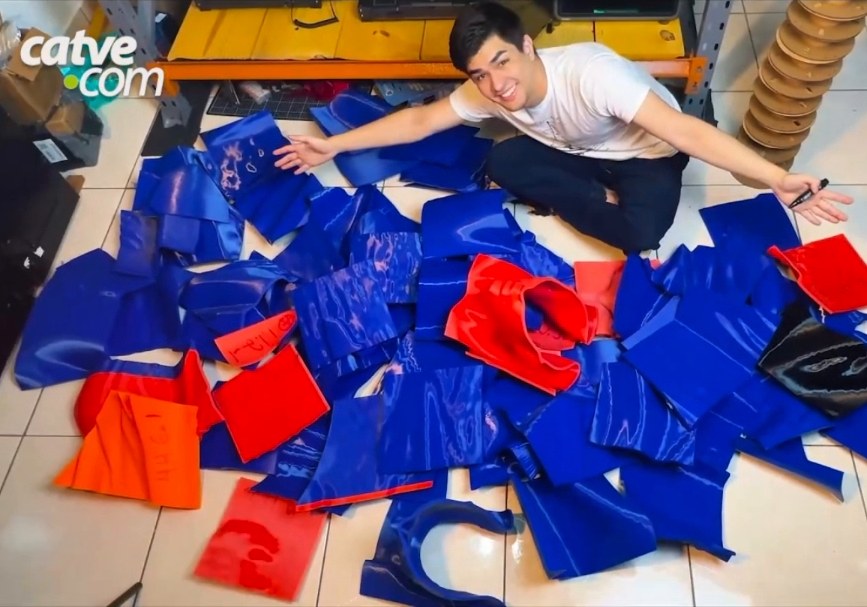
Young man sitting on the floor among dozens of blue and red 3D-printed parts
All the parts before assembly.

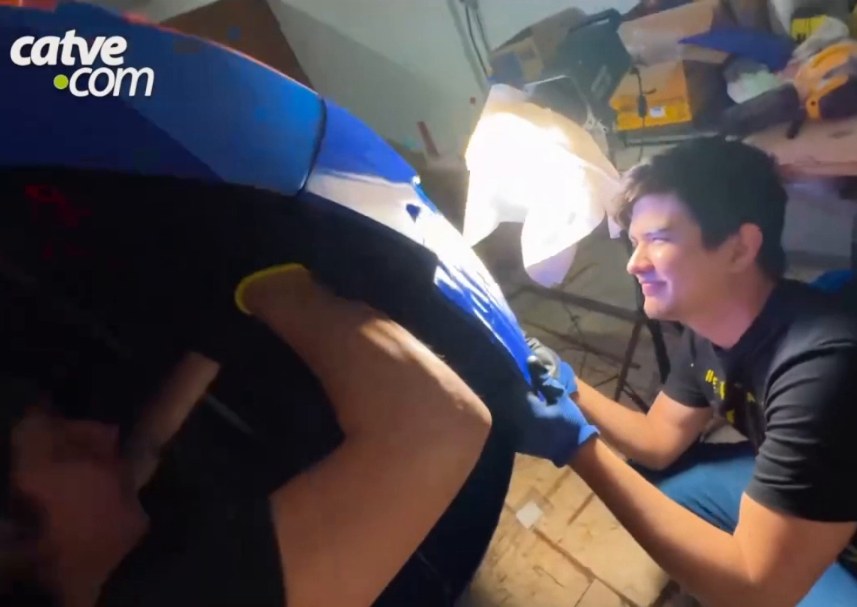
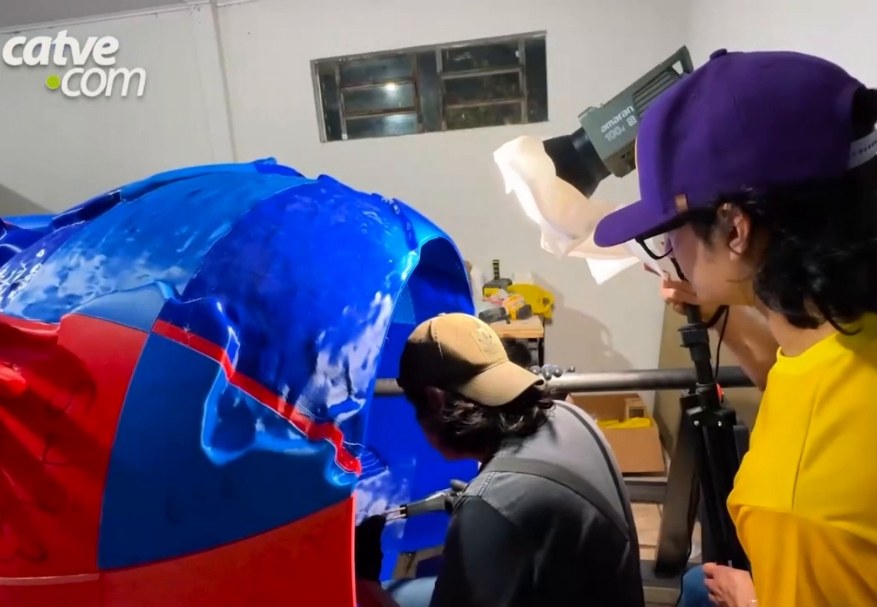
Assembly called for tools from the car industry, nearly 2,500 metal staples, fibreglass, a metal frame to carry the weight, and extra hands to fit the rings together.
Two people joining blue parts, one of them inside the structure
Assembly, seen from inside the trophy.
Two people working on the globe made of blue and red parts
Assembling the globe.
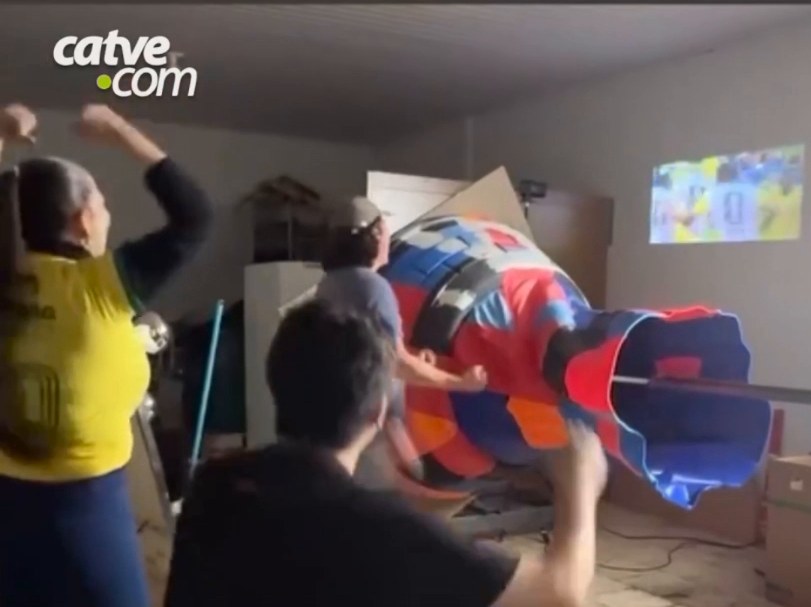
Multicoloured assembled trophy lying horizontally in the workshop while the team watches a match projected on the wall
The assembled trophy lying on its axis, on a match night.

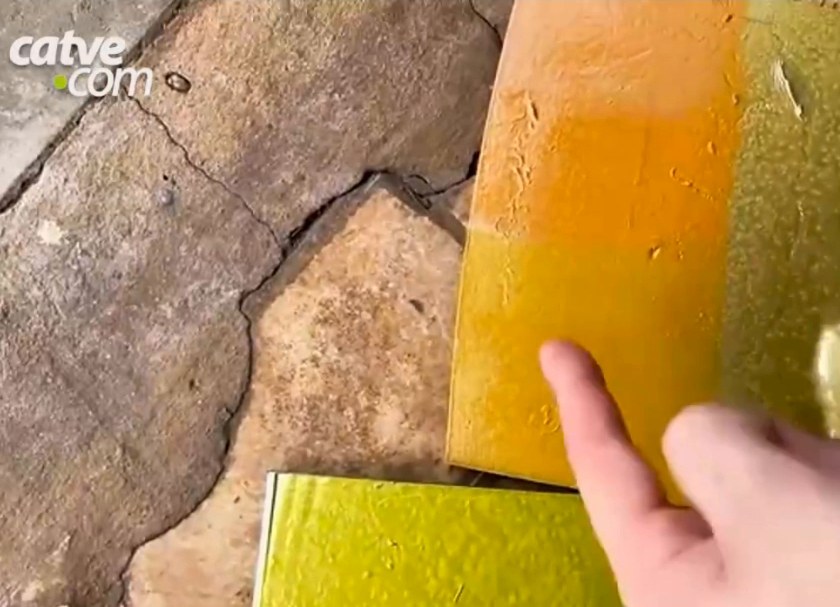
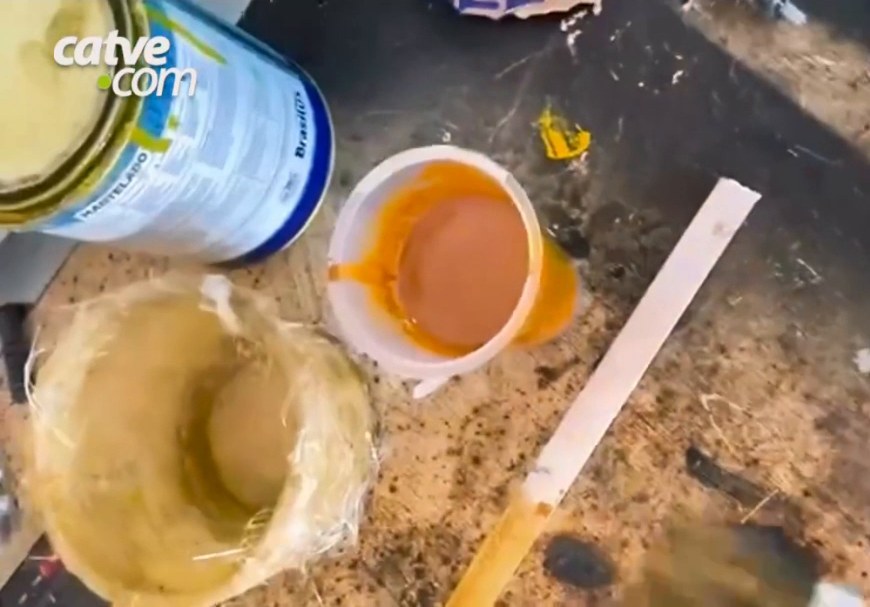
After weeks of work, often late into the night so as not to disturb their daytime business, and without ever forgetting their passion for football, came the preparation for painting, one of the longest stages. Finding the right shade of gold was not easy either.
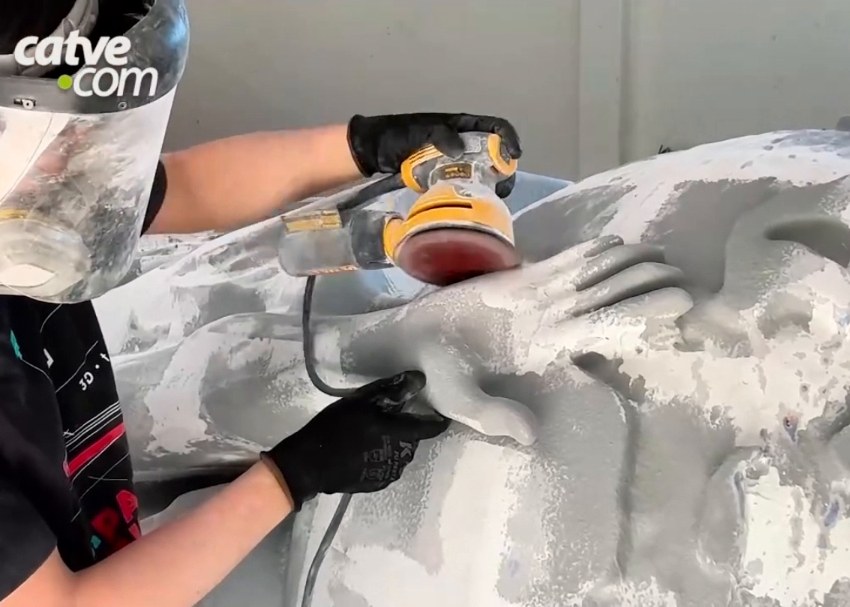
Sander on the filler-coated surface of the trophy, next to a sculpted hand
Sanding the reliefs, down to the fingers of the hands.
Paint cans and mixes on a workbench
Preparing the paint.
Test plates painted in different shades of yellow and gold
Tests to find the right shade of gold.
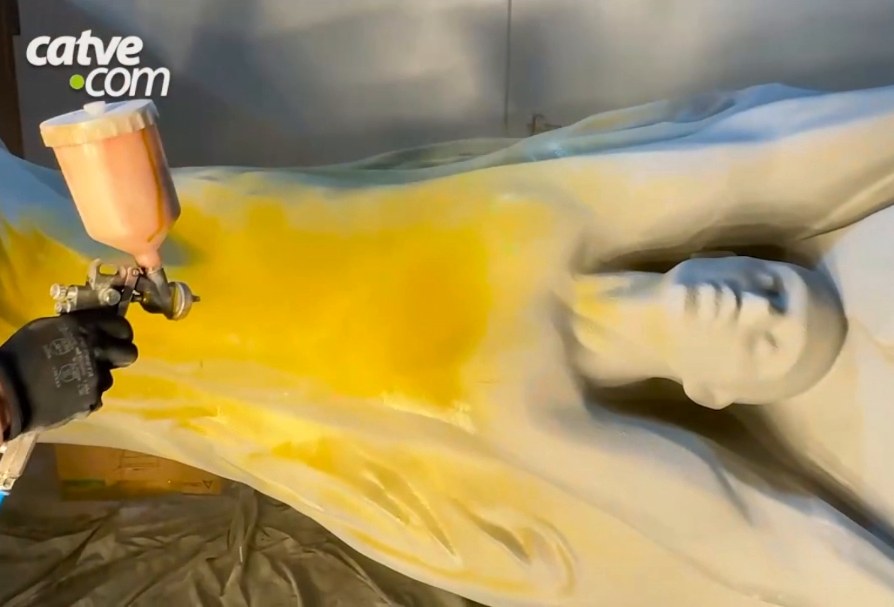
Spray gun applying yellow paint to the sculpted figure of the trophy
Spray painting.
Golden globe of the trophy lying on its metal stand
The globe after painting.
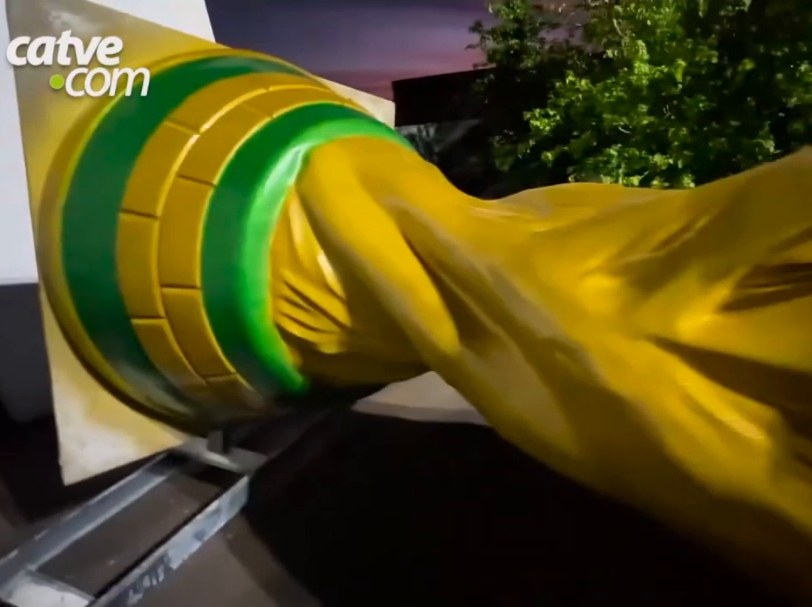
Close-up of the green and gold base and the golden body of the trophy
Detail of the golden finish and the green base.

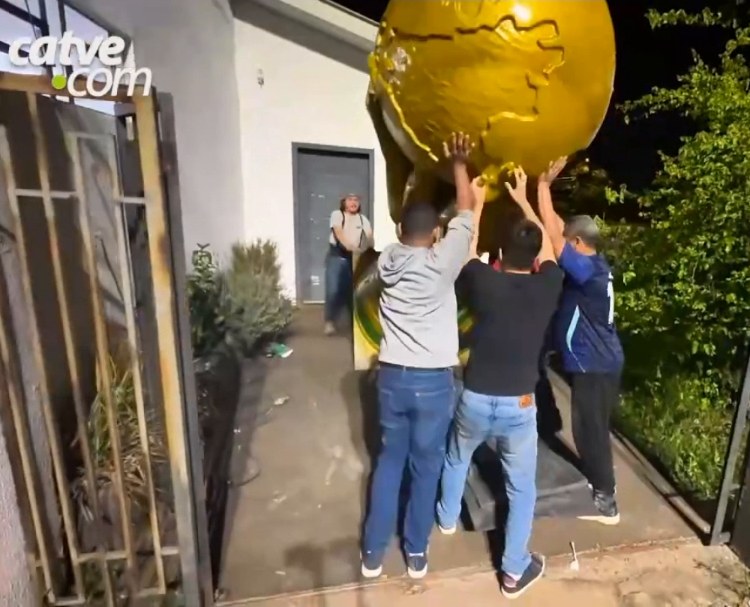
On the day the trophy was raised, help was needed: nobody lifts a trophy of more than 130 kg alone.
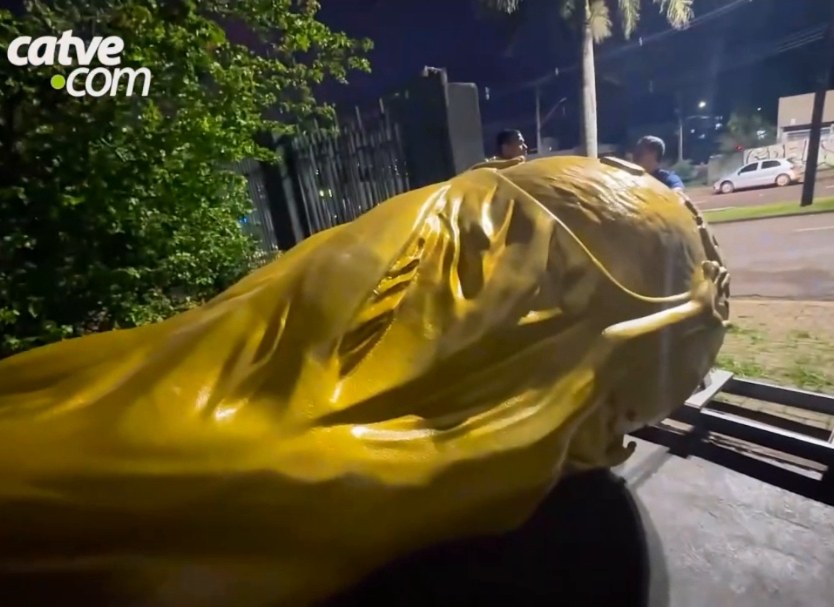
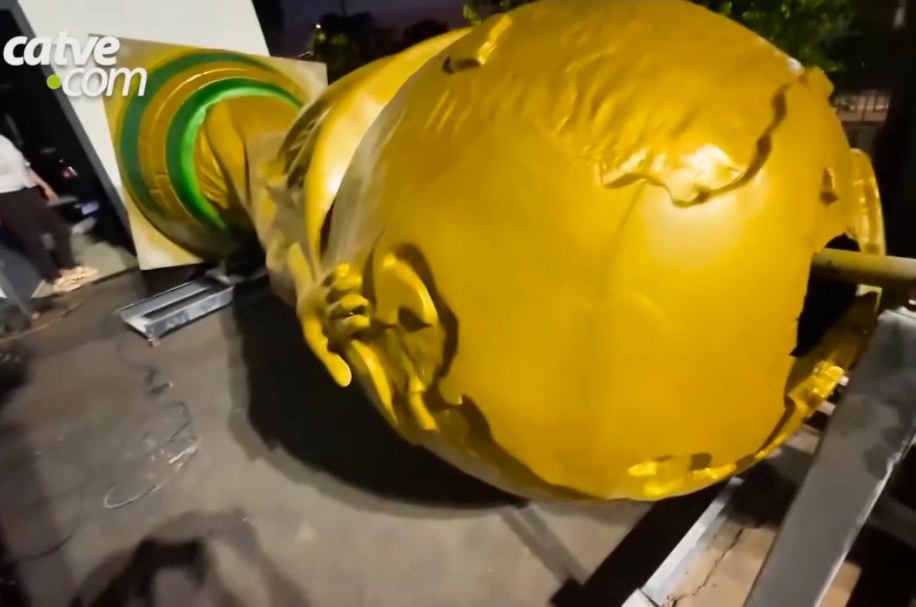
Golden trophy lying in the yard at night
The finished trophy before being raised.
Five smiling people around the golden globe of the trophy
The team around the trophy.
Several people raising the giant trophy at arm's length, at night
It takes a crowd to lift more than 130 kg.
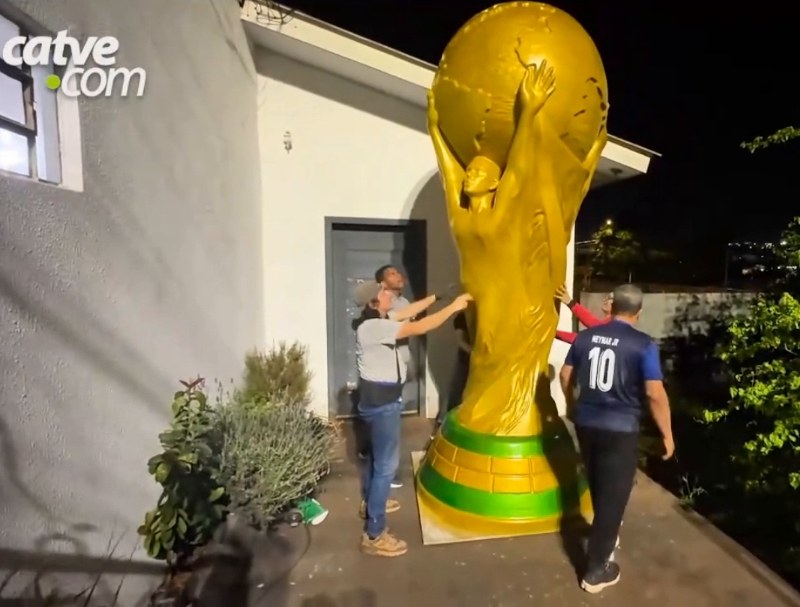
The giant golden trophy standing in front of the house at night, surrounded by the team
The trophy finally upright.

The project, carried out in partnership with a Chinese company and not for profit, has given them ideas: they want to turn it into a business. Next on their list: a boat, and the symbol of Cascavel.

← All makers stories

Enlarged Split3r screenshot